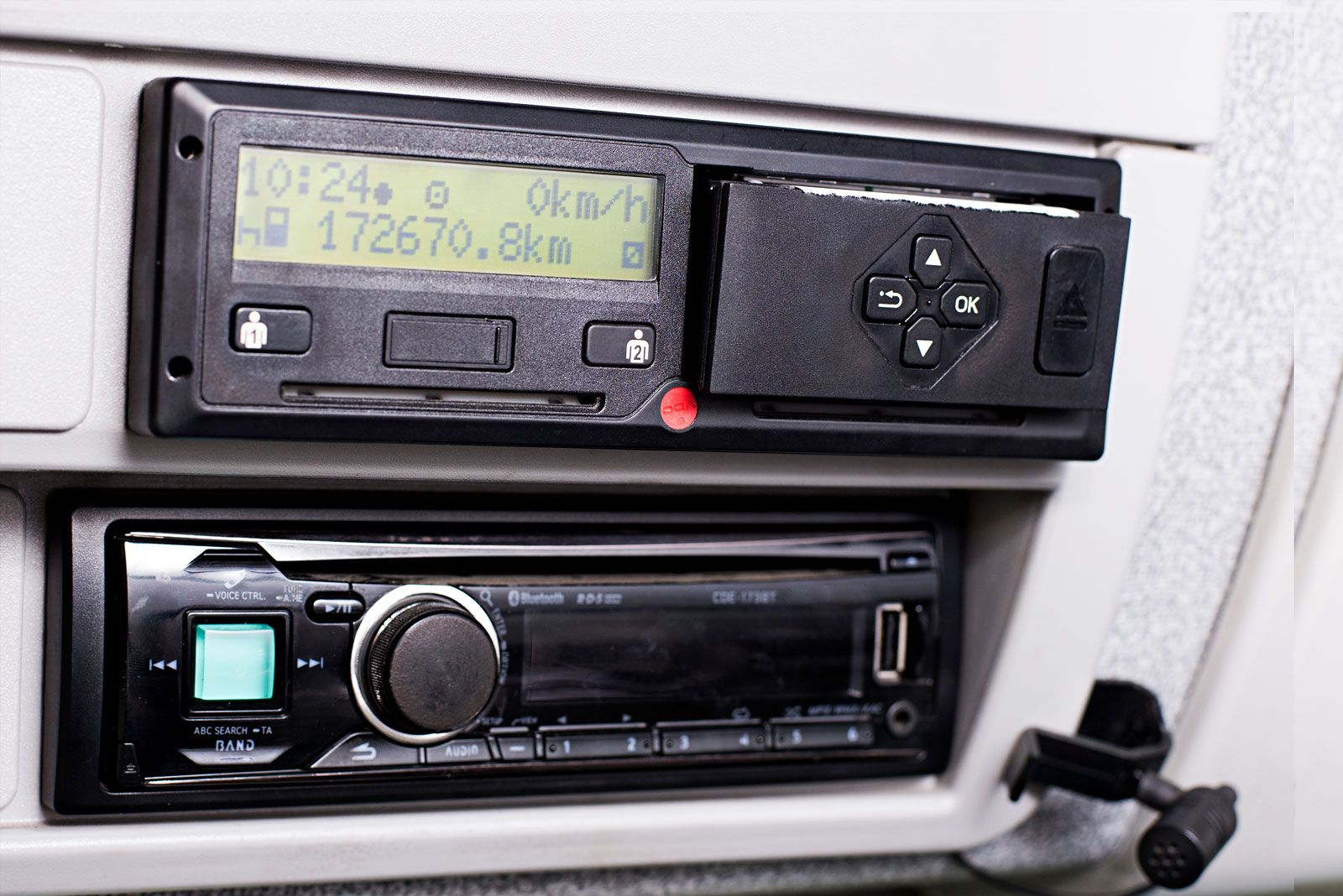
The European Union is actively phasing out older analogue systems, making way for the adoption of advanced digital tachograph technology across the transport sector. This transition represents a significant step forward in how commercial vehicle operations are managed and monitored.
Why the Shift to Digital?
The move to digital tachographs is far more than just a simple technological upgrade; it represents a substantial improvement for both operational safety and overall efficiency within haulage companies. It is time to leave behind the tedious process of manual paper chart analysis and embrace real-time data capture, highly accurate recording, and superior driver management capabilities.
Key Advantages of Modern Tachographs:
✅ Automated Data Recording: Eliminates human error associated with manual entry.
✅ Improved Accuracy and Transparency: Provides clear, auditable records for authorities and fleet managers.
✅ Enhanced Road Safety: Better monitoring of driving times helps prevent driver fatigue.
✅ Streamlined Compliance Monitoring: Simplifies adherence to complex EU driving and rest regulations.
The regulatory environment is evolving rapidly. Following the recent amendment to Regulation (EU) No 165/2014, a new iteration, the smart tachograph version 2, is being rolled out throughout 2023 and beyond. This Version 2 introduces several critical new functionalities specifically designed to enforce EU legislation concerning cabotage rules and the posting of workers. For instance, it will automatically record border crossings and detect the precise location of the vehicle during loading or unloading activities. Furthermore, supplementary data regarding the driver's activity will be securely transmitted to enforcement authorities via a short-range communication channel, making roadside checks far more efficient.
The smart tachograph version 2 also significantly boosts the anti-tampering resistance of the existing tachograph units. This is achieved through sophisticated new features, such as the capacity to authenticate satellite signals (GNSS) and the inclusion of an internal sensor that operates independently of the traditional external motion sensor. This dual-sensor approach adds a layer of security previously unavailable.
The deployment schedule is strict: Smart tachograph version 2 units must be fitted in all newly registered vehicles starting in August 2023. For existing fleets engaged in international road transport operations, the mandatory upgrade deadline is August 2025 at the very latest. Specifically, vehicles equipped with analogue or non-smart digital tachographs must be upgraded by 31 December 2024, while those already using smart tachograph version 1 have until 18 August 2025. Moreover, a further requirement dictates that as of 1 July 2026, any vehicle exceeding 2.5 tonnes operating in international road transport or undertaking cabotage operations must be fitted with the advanced smart tachograph version 2.